
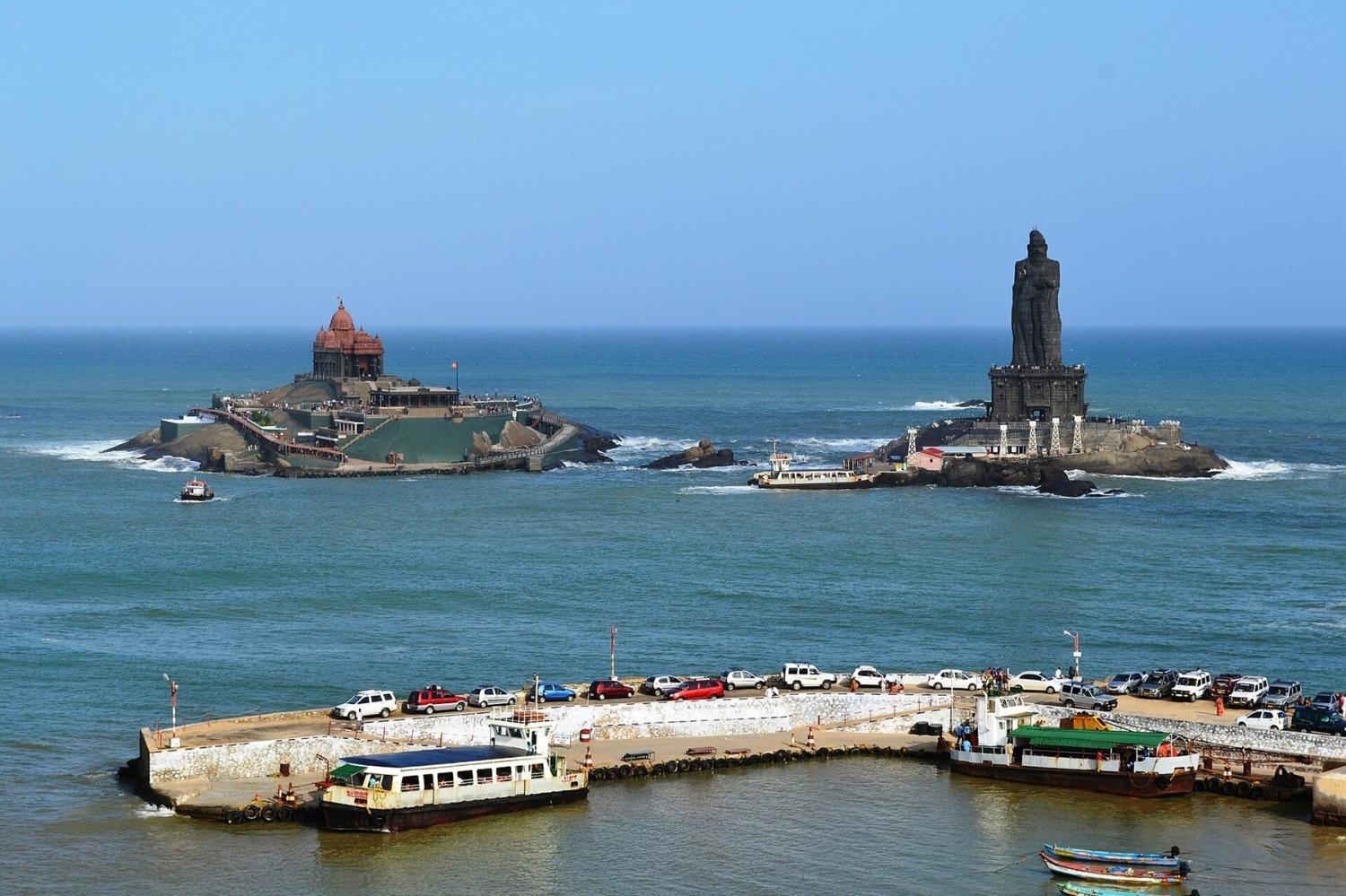
Begin your transformative Arupadai Veedu pilgrimage from Kanyakumari, where three seas converge and divine energy flows abundantly. This sacred circuit takes you through all six holy abodes of Lord Murugan, connecting you with Tamil Nadu's most ancient and powerful devotional tradition spanning over two millennia.
Arupadai Veedu refers to the six sacred temples where Lord Murugan, the Tamil god of war, wisdom, and devotion, manifested in different divine forms. Each temple represents a unique episode from Murugan's mythology and embodies distinct spiritual energies that address different aspects of devotees' lives.
These six temples are celebrated in Thirumurugatrupadai, composed by Nakkeerar in the 2nd century CE, making this pilgrimage one of the oldest continuously practiced religious circuits in Hinduism. For Tamil devotees, completing the Arupadai Veedu darshan is considered supremely meritorious, bringing Lord Murugan's comprehensive blessings across spiritual and material realms.
Starting from India's southern tip provides both spiritual and logistical advantages. Kanyakumari itself is a sacred confluence point, and beginning your Murugan pilgrimage after darshan at Bhagavathy Amman Temple adds divine blessings. Our itineraries are designed to cover all six temples efficiently while allowing adequate time for darshan, rituals, and spiritual contemplation.
Day 1: Kanyakumari to Tiruchendur (95 km)
After morning darshan at Kanyakumari Devi Temple, depart for Tiruchendur, the sea-level Murugan temple located directly on the ocean shore. Arrive by late morning, participate in abhishekams, explore the nine-tiered coastal gopuram, and witness the unique temple atmosphere where waves reach the outer walls. Take ritual sea bath if desired. Overnight stay at Tiruchendur or nearby Tuticorin.
Day 2: Tiruchendur to Madurai (155 km) – Tirupparankundram and Pazhamudircholai
Travel to Madurai, visiting two Arupadai Veedu temples in one day. First, Tirupparankundram (also called Thiruthani), a magnificent rock-cut cave temple where Murugan married Deivanai. This 6th-century architectural marvel combines Jain, Buddhist, and Hindu elements. Later, visit Pazhamudircholai on nearby Solaimalai hills, Murugan's forest abode surrounded by lush greenery. Overnight in Madurai.
Day 3: Madurai to Palani (120 km)
Enjoy leisurely morning exploring Madurai's Meenakshi temple if desired before departing to Palani. Arrive by early afternoon, check into hotel, and rest. Evening visit to Palani hill for sunset darshan offers magical atmosphere with fewer crowds. Overnight at Palani.
Day 4: Palani to Swamimalai via Kumbakonam (180 km)
Begin with early morning Palani darshan, ascending the 450-foot hill by winch, rope car, or traditional 659 steps. Collect the famous Panchamirtham prasadam. Journey to Swamimalai near Kumbakonam, arriving evening. Optional visit to Kumbakonam's famous temples. Overnight near Swamimalai.
Day 5: Swamimalai to Thiruthani (300 km)
Morning darshan at Swamimalai where young Murugan taught the sacred Pranava mantra to his father Shiva. This hillock temple with 60 steps represents the 60-year Tamil calendar cycle. Long but scenic journey to Thiruthani in Tamil Nadu's northern region. Overnight at Thiruthani.
Day 6: Thiruthani to Kanyakumari (670 km)
Early darshan at Thiruthani temple, accessed by 365 steps leading to the 400-foot hilltop with magnificent views and 200-foot gopuram. Begin return journey to Kanyakumari with strategic stops for meals and rest, completing the sacred circuit by evening.
Standing majestically at sea level with waves crashing nearby, Tiruchendur represents Murugan's victory over the demon Soorapadman in the ocean. The temple's unique location—one of few major temples directly on the seashore—creates powerful spiritual energy. The nine-tiered gopuram, 1000-pillar hall, and multiple shrines showcase Dravidian architectural excellence. Devotees believe sea water here carries purifying power, making ritual ocean bath before darshan especially meaningful.
This ancient rock-cut cave temple near Madurai is where Murugan married Deivanai, daughter of Indra, after his victorious war. The temple combines architectural influences from Jain, Buddhist, and Hindu periods, with inscriptions dating back to the 9th century Pandya dynasty. The main sanctum carved into living rock creates intimate darshan atmosphere. This temple emphasizes Murugan as divine householder, blessing marriages and family harmony.
Nestled on Solaimalai hills covered with tropical forests, this temple represents Murugan's connection with nature and wilderness. The lush green surroundings, natural springs, and peaceful atmosphere provide perfect environment for meditation. Lord Murugan here is worshipped as Solaimalai Andi, associated with abundance and prosperity. The climb through forested paths to reach the temple adds to the pilgrimage experience.
Perched 450 feet above the town, Palani's Dandayudhapani (staff-bearing Murugan) represents the ascetic philosopher who renounced divine luxuries. The idol made from Navapashanam (nine medicinal compounds) by Siddhar Bogar is believed to emit healing vibrations. The famous Panchamirtham prasadam—a sacred preparation of banana, jaggery, ghee, honey, and cardamom—is distributed to all pilgrims. Multiple ascent options including winch, rope car, and 659 stone steps cater to different devotee preferences.
Unique among all Murugan temples, Swamimalai celebrates him as Swaminatha Swami—the preceptor who taught the profound Pranava mantra (Om) to his own father, Lord Shiva. The temple architecture follows classical Chola period design with exquisite bronze sculptures. The 60 steps representing the Tamil calendar's 60-year cycle add symbolic meaning to the hilltop ascent. This temple is especially significant for students and seekers of knowledge.
Located near the Tamil Nadu-Andhra Pradesh border, Thiruthani serves as northern guardian in the Arupadai Veedu circuit. The 365 steps to the 400-foot hilltop represent each day of the year, making the ascent itself a symbolic journey through time. The magnificent 200-foot rajagopuram dominates the landscape, visible from miles away. Murugan here appears with consort Valli, emphasizing marital bliss and familial prosperity. The panoramic hilltop views add to the temple's appeal.
Organizing a six-temple pilgrimage spanning 1,700+ kilometers across Tamil Nadu requires expertise, planning, and understanding of both logistics and temple traditions. As Kanyakumari-based operators with seven years of specialized experience, we've perfected the Arupadai Veedu circuit, having guided over 600 groups through this sacred journey.
Our drivers know every route variant, temple timings, best darshan hours, nearby facilities, and local conditions. We maintain relationships with quality hotels near each temple, temple authorities for smoother darshan arrangements, and local guides who can enhance your understanding of each site's significance.
While our standard 6-day itinerary balances efficiency with comfort, we offer complete customization. Extend to 7-8 days for more leisurely pace with additional sightseeing at places like Madurai, Thanjavur, and Kumbakonam. Add Rameshwaram's Jyotirlinga darshan to combine two major pilgrimages. Include Navagraha temples near Kumbakonam for comprehensive celestial blessings.
We accommodate special requirements for elderly pilgrims, arrange wheelchair assistance where needed, coordinate with temple priests for special abhishekams or archanas, and provide vegetarian meal guidance throughout the circuit.
October through March offers ideal weather conditions—moderate temperatures, clear skies, and comfortable conditions for hill temple ascents. Major festivals like Thai Poosam (January-February), Panguni Uthiram (March-April), and Skanda Sashti (October-November) bring elaborate celebrations but also large crowds requiring patience and advance planning.
Summer months (April-June) are hot, especially for midday hill climbs, but early morning and evening darshans remain pleasant. Monsoon (July-September) brings rain that can affect travel but also creates lush green landscapes, especially beautiful at Pazhamudircholai.
Traditional or modest clothing is essential—men can wear dhoti, veshti, or pant-shirt combinations; women should prefer sarees, salwar kameez, or churidars. Comfortable walking shoes for hill climbs, to be removed before temple entry. Sunglasses, cap, and sunscreen for outdoor temple areas. Small backpack for carrying prasadam, water bottle, and personal items. Containers for collecting prasadam, especially Palani's famous Panchamirtham.
Three temples involve hill ascents—Palani (450 feet), Swamimalai (60 steps), and Thiruthani (365 steps). However, Palani offers cable car options, Swamimalai's climb is gentle, and Thiruthani, while steeper, is manageable with rest breaks. Elderly or less mobile devotees can use available transport options at most locations.
Traditional texts don't mandate specific sequence. We optimize routes for travel efficiency, typically starting from nearest temples and progressing northward before returning. The spiritual benefits are identical regardless of visitation order, as completing all six temples is what matters.
Standard packages include breakfast at hotels. Lunch and dinner are at pilgrims' choice and expense, allowing flexibility. We guide you to quality vegetarian restaurants near temples. Temple prasadam is often available. Premium packages can include all meals if preferred.
Yes, most temples offer various special pujas—abhishekams, archanas, homams—which can be arranged. We coordinate with temple authorities for timings and bookings. Costs vary by temple and puja type, paid directly to temples. Advance notice helps ensure availability, especially during peak seasons.
Kanyakumari's unique location at India's southern tip where three seas meet creates powerful spiritual energy. Beginning your Murugan pilgrimage after taking blessings at Devi Kanyakumari temple adds divine grace. Logistically, Kanyakumari provides good access to the southernmost Arupadai Veedu temples, optimizing your circuit routing.
Transform your spiritual life with a complete Arupadai Veedu Murugan temple tour from Kanyakumari. Experience Lord Murugan's divine presence across six sacred forms, immerse yourself in Tamil devotional heritage spanning two millennia, and return blessed in all dimensions of life—spiritual wisdom, material prosperity, family harmony, and victory over obstacles.
Contact us for customized Arupadai Veedu tour packages and detailed itineraries
Kanyakumari Office: +91 87781 58825
Madurai Office: +91 98652 95933
Rameswaram Office: +91 78670 10100
Book Your Arupadai Veedu TourExplore comprehensive South Indian temple circuits from the southern tip.
Learn MoreDirect cab service to Palani's hilltop Dandayudhapani temple.
Learn MoreVisit the sea-level Murugan temple with comfortable taxi service.
Learn More
Google Review

Google Review
Google Review